
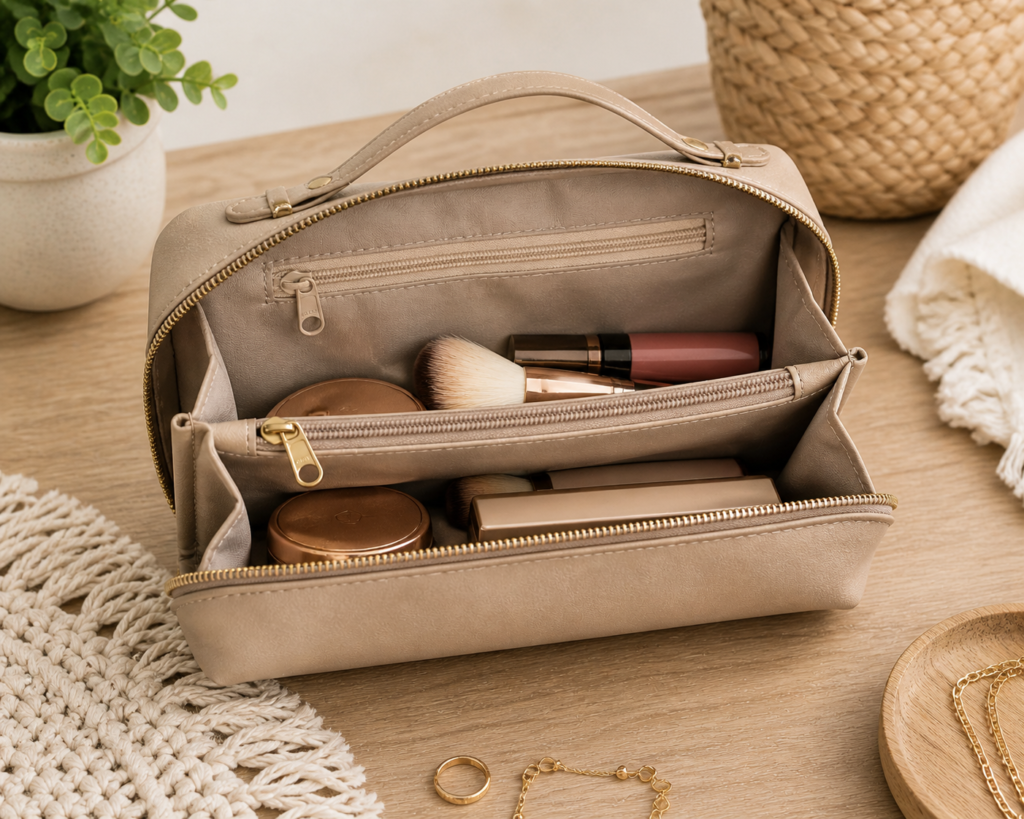
Have you ever found yourself digging through your handbag for your keys while your phone rings, only to discover they’re buried beneath receipts, lip balm, and everything else you’ve collected throughout the week?
You’re not alone.
For many of us, our handbag serves as a portable office, wallet, first-aid kit, snack drawer, and catch-all for the countless little items we rely on every day. Without a simple organization system, even the most beautiful handbag can quickly become cluttered and frustrating to use.
The good news is that staying organized doesn’t require carrying less—it simply requires carrying smarter.
In this guide, you’ll learn practical handbag organization tips that make everyday life easier, discover which organization features are worth looking for in a handbag, and create a system that helps you quickly find exactly what you need whenever you need it.
Whether you carry a compact crossbody, a spacious tote, or something in between, these simple habits will help you spend less time searching and more time enjoying your handbag.
Why Handbag Organization Matters
A well-organized handbag does far more than simply look tidy.
It saves time, reduces stress, protects your belongings, and makes your daily routine feel more manageable. When every item has its place, simple tasks become easier—from paying at the checkout to finding your keys at the end of a long day.
Organization also helps protect the things you carry. Phones are less likely to be scratched by loose keys, sunglasses stay safer in dedicated pockets, and cosmetics are less likely to leak onto everything else inside your bag.
Perhaps most importantly, organization allows you to carry what you actually need instead of everything you might need someday.
Does handbag organization really make a difference?
Absolutely.
Even a few small changes can transform how your handbag functions. Spending less time searching for everyday essentials means less frustration, less clutter, and a more enjoyable experience every time you reach into your bag.
A thoughtfully organized handbag also encourages you to keep carrying only the items that truly serve a purpose, making your bag lighter and more comfortable throughout the day.
Step 1: Start With a Clean Slate
The easiest way to organize your handbag is to begin by completely emptying it.
Place everything on a table where you can clearly see what you’ve been carrying.
Most people are surprised by what they find.
Old receipts.
Store loyalty cards.
Pens that no longer work.
Expired coupons.
Loose change.
Wrappers.
Items that were only meant to stay in the bag for a day or two.
Before putting anything back, sort your belongings into three simple groups.
Everyday Essentials
These are the items you use almost every day.
For example:
- Wallet
- Phone
- Keys
- Sunglasses
- Lip balm
- Medication
- Tissues
- Small notebook
- Reusable shopping bag
These items deserve a permanent place inside your handbag.
Occasionally Needed Items
Some items are useful—but not every day.
These might include:
- Charging cable
- Travel-sized sunscreen
- Umbrella
- Small first-aid supplies
- Gift cards
- Business cards
Consider storing these together in a small pouch or adding them only when you’ll actually need them.
Remove the Clutter
Anything you haven’t used in weeks probably doesn’t belong in your everyday handbag.
Removing unnecessary items immediately creates more space while making everything else easier to find.
Many people discover they can reduce the weight of their handbag simply by cleaning it out.
Step 2: Decide What You Really Need
One of the biggest reasons handbags become cluttered is because we gradually add items “just in case.”
Over time, those extra items add weight without adding much value.
Instead of asking,
“What might I need?”
Ask yourself,
“What do I actually use?”
Think about a typical day.
Which items do you reach for every single time you leave the house?
For many people, that list is surprisingly short.
It often includes:
- Phone
- Wallet
- Keys
- Sunglasses
- Lip balm
- Medication
- Tissues
- Hand sanitizer
Everything else should earn its place.
If you rarely use something, consider leaving it at home until you truly need it.
What should you carry every day?
There’s no universal checklist because everyone’s lifestyle is different.
Parents may carry children’s necessities.
Travelers may need passports and chargers.
Professionals might carry planners or tablets.
The goal isn’t to carry as little as possible.
The goal is to carry exactly what supports your daily routine without unnecessary clutter.
When your handbag reflects your actual lifestyle instead of every possible scenario, organization becomes much easier to maintain.
Step 3: Give Everything a Home
Once you’ve decided what belongs in your handbag, the next step is making sure every item has a dedicated place.
This is where thoughtful handbag design makes a tremendous difference.
Instead of dropping everything into one large compartment, use the pockets and organizational features that were designed to make everyday life easier.
For example:
- Store your keys in the same pocket every time.
- Keep your phone in an easy-to-reach slip pocket.
- Use a zipper pocket for valuables like cash or important cards.
- Store lip balm or small cosmetics together instead of letting them roll around freely.
When every item has a designated location, you stop searching and start reaching automatically.
Do you need lots of pockets?
Not necessarily.
More pockets don’t always mean better organization.
Some people love multiple compartments because every item has its own place.
Others prefer one spacious interior with just a few thoughtfully placed pockets.
The best handbag organization system is the one that matches the way you naturally use your bag.
Consistency matters more than the number of compartments.
If you always return your keys, phone, and wallet to the same places, you’ll rarely waste time searching for them.
Step 4: Choose the Right Size Handbag
Even the best organization system can only do so much if your handbag isn’t the right size.
A bag that’s too large often becomes a place where extra items accumulate until important belongings disappear beneath the clutter.
On the other hand, a handbag that’s too small forces everything into one crowded space, making it difficult to access even your everyday essentials.
The ideal handbag provides enough room for what you regularly carry while still encouraging you to stay organized.
Think of your handbag as your everyday workspace.
When it’s appropriately sized, everything has room to fit comfortably without becoming crowded—or getting lost.
Can the wrong handbag size make organization harder?
Absolutely.
Many people assume that buying a larger handbag will automatically solve their organization problems.
In reality, oversized bags often invite unnecessary clutter because there’s always room for “just one more thing.”
Choosing a handbag that’s appropriately sized for your lifestyle naturally encourages better organization and makes it easier to find what you need.
If you’re still deciding which size is right for you, be sure to read our guide:
Related Article: How to Choose the Right Handbag Size for Your Lifestyle
Step 5: Organize by How Often You Use Things
One of the simplest ways to keep your handbag organized is to arrange items based on how often you use them.
Think about your daily routine.
Which items do you reach for multiple times a day?
Which ones are only needed occasionally?
Keeping your most frequently used items within easy reach saves time and helps prevent unnecessary digging through your bag.
A simple system might look like this:
Easy Access
Items you use several times each day should always be stored in the most accessible locations.
These often include:
- Phone
- Keys
- Wallet
- Sunglasses
- Lip balm
Exterior pockets or easy-to-reach interior slip pockets are ideal for these essentials.
Secure Storage
Items that you don’t use often—but still want close by—can be stored in an interior zipper pocket.
Examples include:
- Gift cards
- Checkbook
- Important documents
- Spare cash
- Medication
Keeping these items zipped away provides both organization and added security.
Occasional Items
Some belongings only need to be carried occasionally.
Examples might include:
- Charging cables
- Small sewing kit
- First-aid supplies
- Snacks
- Travel documents
If your handbag includes a larger main compartment, placing these items in a small pouch helps keep them together while preventing them from getting lost.
Should you use organizer pouches?
They can be very helpful—but only if they simplify your routine.
Too many pouches can actually create more work by adding extra layers between you and the items you need.
If you choose to use pouches, give each one a specific purpose, such as electronics, cosmetics, or travel essentials.
Step 6: Keep Your Handbag Light
It’s amazing how quickly a handbag gains weight.
Receipts.
Coins.
Extra makeup.
Duplicate pens.
Old shopping lists.
Unused loyalty cards.
Reusable bags.
Chargers you haven’t needed in months.
Individually, these items don’t seem significant.
Together, they can make a handbag noticeably heavier and much more difficult to organize.
Carrying unnecessary weight isn’t just inconvenient—it can also make your handbag less comfortable to wear throughout the day.
Take a few minutes every week to remove items you no longer need.
Your shoulders—and your back—will thank you.
Is a heavier handbag always better?
Not at all.
A heavier handbag doesn’t necessarily mean you’re more prepared.
In many cases, it simply means you’re carrying items that no longer serve a purpose.
A thoughtfully packed handbag should contain what you need—not everything you own.
Step 7: Build a Simple Maintenance Habit
The easiest handbags to keep organized are the ones that receive a little attention on a regular basis.
Fortunately, maintaining your handbag doesn’t take much time.
In fact, two or three minutes at the end of the day is often all that’s needed.
Before putting your handbag away each evening, consider taking a quick moment to:
- Throw away receipts and trash.
- Return items to their designated pockets.
- Remove anything you won’t need tomorrow.
- Wipe small spills from the lining.
- Recharge electronic devices if necessary.
- Restock tissues or other daily essentials.
These small habits prevent clutter from building up over time and make every morning a little easier.
How often should you clean out your handbag?
A quick tidy each evening and a more thorough clean once a week is enough for most people.
Regular maintenance helps your handbag stay organized while also protecting the materials and extending its life.
Common Handbag Organization Mistakes
Even with the best intentions, it’s easy to develop habits that make staying organized more difficult.
Fortunately, most of these are easy to correct.
Carrying Too Much
One of the most common mistakes is filling every available space simply because it’s there.
Remember, extra space doesn’t mean it has to be filled.
Never Cleaning Out Your Bag
Receipts, wrappers, and miscellaneous items accumulate surprisingly quickly.
A regular clean-out keeps clutter from taking over.
Buying the Wrong Size
An oversized handbag often becomes a storage container rather than an organized everyday bag.
Likewise, a handbag that’s too small can make even essential items feel crowded.
No Designated Places
If your keys land in a different spot every day, you’ll probably spend time searching for them every day.
Consistency is one of the simplest organization tools available.
Keeping Everything “Just in Case”
It’s tempting to prepare for every possible situation.
In reality, carrying too many “just in case” items usually creates unnecessary weight while making important belongings harder to find.
Continue Learning
Want to make your everyday carry even better?
These guides can help:
- The Ultimate Guide to Choosing the Perfect Handmade Handbag
- How to Choose the Right Handbag Size for Your Lifestyle
- Crossbody vs. Shoulder Bags: Which Is Right for You? (Coming Soon)
- How to Care for Your Handmade Handbag (Coming Soon)
Each guide explores a different aspect of choosing, organizing, and enjoying a handbag you’ll love using every day.
Finding a Handbag That Works for You
While good organization habits make a big difference, the design of your handbag matters too.
Features like thoughtfully placed pockets, secure zipper compartments, durable waterproof linings, and practical layouts all contribute to a better everyday experience.
When choosing your next handbag, look beyond appearance alone.
Consider how the interior is organized, whether it matches your daily routine, and whether it helps you stay organized without adding unnecessary complexity.
A well-designed handbag should make your life easier—not require extra effort to use.
Final Thoughts
An organized handbag isn’t about perfection.
It’s about creating a simple system that supports your everyday life.
When every item has a purpose and every essential has a dedicated place, you’ll spend less time searching, carry less unnecessary weight, and enjoy using your handbag far more.
The best organization system is the one you’ll actually maintain.
Start small.
Remove what you don’t need.
Give everything a home.
Then build simple habits that keep your handbag organized one day at a time.
A little organization goes a long way—and every time you reach into your handbag and find exactly what you need, you’ll be glad you took the time to create a system that works for you.
 Bagadoo Tip
Before buying your next handbag, lay everything you carry every day on a table. Seeing your daily essentials together makes it much easier to choose a handbag with the right size, organization, and features for your lifestyle.